36 Exposures Ebook
A guide to film photography, intentional shooting and the symbolism behind the shot.
Who is this Ebook for?
This ebook is more anyone interested in shooting film and the processes that accompany the craft. I am offering the first three chapters completely free for a limited time.
About the Author
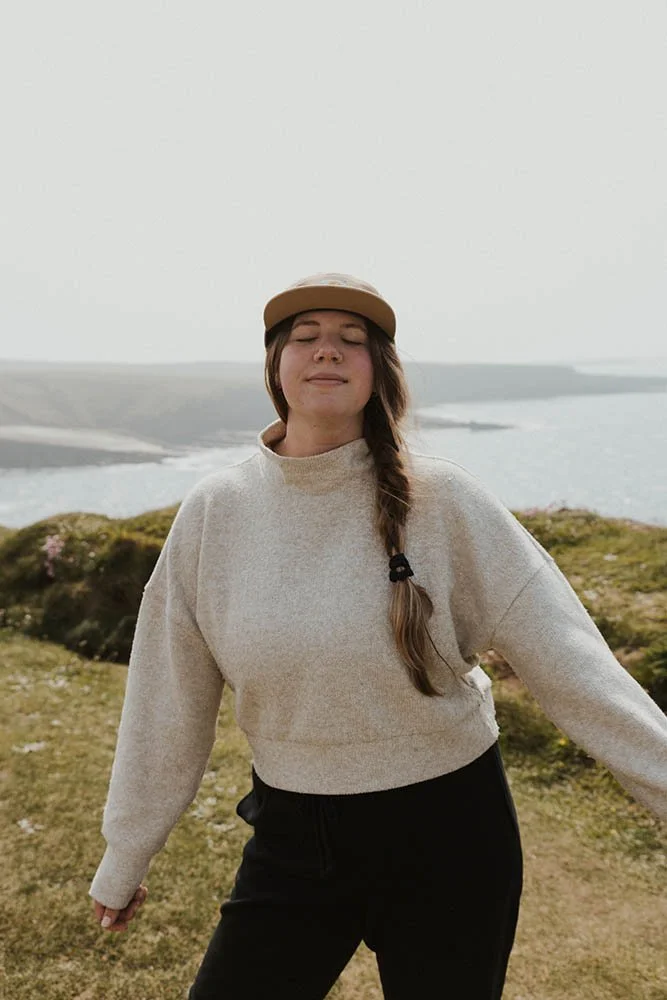
Tiff Nutt is a photographer, maker, and creative whose work lives at the intersection of intention and craft. Drawn to the slower rhythms of film photography, she believes that the most meaningful images are not taken — they are waited for, found in the quiet space between looking and truly seeing.
Her work explores the symbolic language of everyday life — the light that falls through ordinary windows, the gestures that speak volumes, the small and overlooked details that carry the weight of larger human truths. She shoots film not out of nostalgia but out of conviction: that constraint is creative, that slowness is a practice, and that 36 frames spent wisely will always outlast 3,600 spent carelessly.
When she is not behind a camera, she designs and crafts goods for photographers who believe that the tools you carry should be as considered as the work you make with them.
You can follow her work and find her products at tiffnutt.com and on Instagram at @tiff_nutt.
This is Chapter 1-3 of the ebook, 36 Exposes, by Tiff Nutt.
Part 1: The Art of Slowing Down
Chapter 1: Speed Is the Enemy of Meaning
There is nothing wrong with shooting fast. Sports photographers shoot fast. Photojournalists shoot fast. Some of the most iconic images in history were captured in a fraction of a second by someone with quick instincts and a faster trigger finger. Speed, in those contexts, is a tool — and a necessary one.
But most of us aren't covering conflict zones or sidelines. Most of us are photographing the world we move through every day — streets, landscapes, people we love, quiet moments, small details that catch our eye for reasons we can't always explain. And in that world, speed isn't a tool. It's a habit. And like most habits, we've stopped noticing we're doing it.
Think about the last time you shot digitally. How many frames did you take? How many did you keep? For most photographers, the ratio is somewhere between humbling and alarming — hundreds of shots culled down to a handful of keepers. We shoot more and more, hoping that somewhere in the pile, the right image will emerge. And sometimes it does. But that approach comes with a hidden cost that we rarely talk about: when you shoot everything, you stop truly seeing anything.
Speed creates a buffer between you and the moment. When you know you can shoot 500 frames on a memory card, there's no urgency to really look before you lift the camera. You can always shoot now and decide later. But "later" is where meaning goes to die. The decision about what an image is, what it says, what it's for — that decision belongs at the moment of shooting, not in Lightroom at midnight.
This is what photographers mean when they talk about intention. Intention isn't a personality trait or a talent. It's a practice, and it begins before your eye ever reaches the viewfinder. It begins when you stop and ask yourself a simple but radical question: Why this?
Why this subject? Why this angle? Why this light? Why right now?
Most of us skip this question entirely. We react. We see something interesting and we shoot it, fast, before it disappears. And sometimes that instinct produces something beautiful — but we usually can't explain why, and we can't replicate it. Intentional shooting doesn't mean slow in the sense of sluggish or timid. It means deliberate. It means your eye and your mind are working together before your finger moves. It means the shot you take is a choice, not a reflex.
Henri Cartier-Bresson, one of the greatest photographers who ever lived, spent enormous amounts of time simply watching before he ever raised his camera. He studied a scene — the way people moved through it, the geometry of light and shadow, the rhythms of ordinary life — until he understood it well enough to know exactly when the decisive moment would arrive. Then he was ready. Then he was fast. But the speed was the last step in a slow process, not a substitute for one.
You can learn to work this way too, and you don't need to be Henri Cartier-Bresson to do it. You just need to build one simple habit before anything else: pause.
Before you raise your camera, stop. Look at what's in front of you — really look. Notice the light and where it's falling. Notice what's in the background, what's competing for attention, what's distracting and what's essential. Notice how you feel about this scene, because that feeling is data. It's your instinct telling you something is worth capturing. The pause doesn't have to be long. Ten seconds. Fifteen. But those seconds are where intention is born.
When you start shooting film, this pause becomes unavoidable. The camera will insist on it. But even before you pick up a film camera, you can start practicing it now — because the mindset comes first, and the medium will deepen it.
Slow down before you shoot. See before you capture. Ask why before you press the shutter.
The images that stay with people — the ones that stop a scroll, that get printed and framed, that someone looks at years later and feels something — those images almost always began with a photographer who paused long enough to truly see what was in front of them.
Speed is efficient. But efficiency was never the point of art.
Chapter 2: The Mindset Shift — From Spray and Pray to See and Wait
There's a phrase that floats around photography communities, usually said with a mix of affection and self-awareness: spray and pray. It means exactly what it sounds like — point the camera, hold down the shutter, and hope that somewhere in the burst, the universe delivered you a good frame. If you've shot digital for any length of time, you've probably done this. Most of us have. It's not a character flaw. It's what technology invites.
Modern cameras are extraordinary machines. They can shoot 20, 30, even 40 frames per second. They track eyes across a frame with unsettling accuracy. They compensate for your shaking hands, the moving subject, the imperfect light. They are engineered, at every level, to lower the barrier between you and a technically acceptable image. And they have succeeded. The average smartphone photo taken today is technically better — sharper, better exposed, more color accurate — than what a professional lab could produce 40 years ago.
But technical perfection and meaningful photography are not the same thing, and the gap between them is where most photographers quietly get lost.
The spray and pray approach trains your eye to be passive. When you're firing in bursts, you aren't really seeing — you're harvesting. You cast a wide net and sort later. The camera becomes less of a creative tool and more of a recording device, capturing everything so you can decide what mattered after the fact. The problem is that meaning isn't something you can add in post. It's something you bring to the moment — or you don't.
Shifting from spray and pray to see and wait isn't about shooting less for the sake of some romantic ideal. It's about fundamentally changing your relationship with the moment in front of you. It's about moving from passive to active, from reactive to intentional, from harvesting to choosing.
And that shift is harder than it sounds, because it requires something most of us are genuinely uncomfortable with: uncertainty.
When you spray, you feel covered. You got it — probably. When you wait, when you commit to one frame at the decisive moment, there's real risk involved. You might miss it. The moment might pass before you're ready. The shot you chose might not be the right one. That vulnerability is exactly why most photographers never make this shift — and it's exactly why the ones who do make such compelling work. They have skin in the game. Every frame is a genuine decision, and genuine decisions carry weight.
So how do you actually make this shift? It starts with three changes in how you approach a scene.
See first, shoot second. Before you raise your camera, give yourself permission to simply observe. Watch the scene unfold without the pressure to capture it. Notice where the light is moving, how people or subjects are behaving, what the background is doing. You are gathering information, building a mental picture of what this scene could become. Many photographers find that this observational period — even just a minute or two — completely changes what they end up shooting.
Ask what the image is about. This is the question that separates intentional photographers from reactive ones. Not what am I looking at but what is this image about? Is it about solitude? Movement? Contrast? Tenderness? You don't need a precise answer — sometimes it's a feeling more than a word — but having some sense of your intent shapes every decision that follows: where you stand, when you shoot, what you include and what you leave out.
Commit to the frame. Once you've seen, once you have some sense of what you're after, commit. Choose your position. Choose your moment. Press the shutter once, with purpose. This is uncomfortable at first — it will feel like you're leaving too much on the table. But commitment is a muscle, and every deliberate frame you make strengthens it.
This is, at its core, what film photography teaches by necessity. A roll of 36 frames costs money to buy and money to develop. Every frame you waste on a shot you weren't sure about is a real, tangible loss. That constraint — uncomfortable as it is — is also one of the greatest creative gifts the medium offers. It forces the question every time: Is this worth one of my 36?
You'll be surprised how often the answer is no — and how much better your photography becomes because of it.
The see and wait approach doesn't mean you'll never miss a shot. You will. Sometimes you'll wait for a moment that never arrives. Sometimes you'll commit to a frame and it won't work. That's part of it. The goal isn't a perfect hit rate. The goal is a deeper, more honest engagement with what you're shooting — and over time, that engagement produces work that means something. Not just to you, but to anyone who sees it.
Spray and pray produces images. See and wait produces photographs.
The difference is everything.
Chapter 3: Presence Before the Shot — Exercises for Building Patience
Patience is not a personality trait. This is the first thing to understand. It is not something you either have or don't have, something baked into your temperament at birth that determines whether you'll ever be the kind of photographer who waits for the light, who spends an hour in one spot, who comes back to the same location three days in a row because the conditions weren't right the first two times. Patience is a practice. It is a skill, built the same way every other skill is built — through repetition, through discomfort, through showing up even when it feels unproductive.
The reason most photographers never develop it isn't laziness. It's that nothing in our daily lives reinforces it. We live in an environment engineered for speed and immediate reward. Information arrives instantly. Entertainment is always available. Feedback is constant and immediate. Our nervous systems have adapted accordingly — we are, most of us, genuinely uncomfortable with stillness. We reach for our phones when we stand in line. We fill silences. We multitask during moments that deserve our full attention. Asking yourself to slow down and be present before you shoot is asking yourself to swim against a very strong current.
But the current can be navigated. And the photographers who learn to navigate it — who build genuine presence as a habit — find that it changes not just how they shoot, but how they see the world when they're not shooting at all. The camera becomes a lens through which they've learned to look at everything more carefully, more slowly, more honestly.
The exercises in this chapter are designed to build that presence incrementally. None of them require special equipment or significant time commitments. What they require is consistency — doing them regularly enough that slowness becomes your default mode rather than something you have to consciously enforce.
Exercise 1: The One-Hour, One-Location Challenge
Choose a single location — a park bench, a busy street corner, a quiet room in your home, a stretch of shoreline — and commit to spending one full hour there without moving more than a few feet in any direction. Bring your camera, but for the first twenty minutes, don't shoot anything. Just watch.
Notice how the light changes. Notice who moves through the space and how. Notice the details you would have walked past if you were moving — the texture of a surface, the way shadows shift across it, the small dramas of ordinary life unfolding in the background. Let yourself be bored. Boredom, in this context, is not a sign that nothing is happening. It's a sign that your mind is decelerating, releasing the noise of the day, becoming available to the subtler things in front of you.
After twenty minutes, begin shooting — but with a limit. Give yourself no more than ten frames for the entire hour. Ten frames across sixty minutes forces you to be extraordinarily selective. Every time you feel the urge to shoot, ask yourself: Is this the best version of this scene I'm likely to see today? Is there something better coming if I wait? Sometimes the answer is yes. Sometimes it's not. But the act of asking it, every single time, is the exercise. That question is the muscle you're building.
When the hour is up, sit with what you shot before you look at it. Write down — even just in your phone's notes — what you were thinking when you pressed the shutter each time. What were you trying to capture? What did the scene mean to you in that moment? When you do look at your images, compare them to your notes. The gap between what you intended and what the camera recorded is some of the most valuable information you'll ever get about your own photography.
Exercise 2: Shoot Without Looking at Your Results
This one is simple in concept and genuinely difficult in practice. Go out for a dedicated shooting session — an hour, two hours, however long feels right — and when you come home, do not look at your digital images. Not that evening. Not the next morning. Wait at least three days, ideally a week.
This exercise is specifically designed to break the feedback loop that digital photography has conditioned us into. When you know you can check your shots immediately, part of your brain is always in review mode — half-present in the moment, half-anticipating the verdict. Removing that immediate feedback forces you to be fully in the experience of shooting rather than partly in the experience of evaluating.
When you do finally look at your images, you'll likely find one of two things: either the work is better than you expected, because you were more present than you realized, or it reveals clearly where your attention was drifting. Both outcomes are useful. Both tell you something true about where you are as a photographer and where your attention lives when you're behind the lens.
For film photographers, this exercise is built into the medium — you have no choice but to wait. But even before you pick up a film camera, practicing this digitally begins rewiring your relationship with immediacy. It trains you to trust the moment rather than the preview.
Exercise 3: The Pre-Shoot Walk
Before any dedicated photography session — whether you're heading out for street photography, a landscape shoot, a portrait session, or even just a walk around your neighborhood — give yourself fifteen minutes of walking without your camera. Leave it in the bag. Leave it in the car. Walk through the space you're about to photograph as a human being, not as a photographer.
Notice what draws your attention. Notice where your eyes go naturally, what details pull you in, what atmosphere the place has. Notice how it feels — not just what it looks like. Is there something melancholic about it? Joyful? Tense? Quiet in a way that feels heavy, or quiet in a way that feels peaceful? These observations are the raw material of intentional photography. They tell you what the place is, before you start deciding how to photograph it.
When you go back with your camera, you'll find you already have a relationship with the space. You're not starting from scratch, reacting to whatever presents itself first. You have context, and context shapes everything — where you position yourself, what you wait for, what you include in the frame and what you deliberately leave out.
This pre-shoot walk is also an act of respect — for the place, for the people in it, and for the images you're about to make. It communicates, even just to yourself, that this matters enough to approach carefully.
Exercise 4: The Single Subject Study
Pick one subject — a single object, a person (with their permission), a specific view from your window, a particular tree in a park — and photograph only that subject for an entire month. Not every day necessarily, but regularly, and always the same subject.
This exercise does something remarkable over time. In the first week, you'll feel like you've exhausted the subject. You'll think you've found all the interesting angles, captured all the interesting light, said everything the subject has to say. Sit with that feeling and keep going anyway. In the second week, you'll start to notice things you missed. In the third, you'll begin to understand the subject in a way that goes beyond its surface — how it changes with the weather, with the time of day, with the season. By the fourth week, you may find yourself making your most interesting images of the entire month, because you've finally slowed down enough to truly see something that was in front of you all along.
This is what intimacy with a subject looks like. And it is one of the defining qualities of photographers whose work endures — they don't just photograph the world broadly. They go deep. They return. They look again. They find the extraordinary in the ordinary because they've spent enough time with the ordinary to see past its surface.
Exercise 5: Meditate Before You Shoot
This one will feel strange if you've never meditated, and possibly unnecessary if you have. But stay with it.
Before a shooting session, find somewhere quiet — your car, a park, a corner of a room — and spend five to ten minutes in silence. No phone, no music, no podcast. Just sit, breathe, and let your mind settle. You're not trying to achieve enlightenment. You're simply giving your nervous system a chance to downshift from the pace of daily life into something slower and more receptive.
Photography at its best is an act of attention — and attention requires a certain quality of inner quiet that most of us rarely access during a busy day. Even five minutes of stillness before you pick up your camera can change the quality of presence you bring to a shoot. You'll notice more. You'll react less. You'll find yourself drawn to subtler, more interesting moments than you might have noticed in a more agitated state.
Many photographers report that their best work comes on days when they felt unhurried — not rushed to get somewhere, not anxious about getting the shot, not distracted by the noise of whatever else is happening in their lives. This exercise is an attempt to manufacture that quality of unhurriedness, even on days when life doesn't offer it naturally.
None of these exercises will transform your photography overnight. That's not the point. The point is to begin shifting your default setting — from fast to slow, from reactive to present, from harvesting to choosing. Each time you practice one of them, you're building a new relationship with time and attention, one that will show up in your images in ways that are hard to define but impossible to miss.
Presence is the foundation of everything that follows in this book. It's what makes film photography more than just a format choice, and it's what makes symbolism possible — because you can only find meaning in what you're willing to truly look at.
So look. Slowly. Deliberately. Again and again.
The photographs will follow.