Blog

In this blog you will find elopement inspiration and wedding location guides for my favorite spots.
elopements Tiffany Nutt elopements Tiffany Nutt

Why Late April Is the Best-Kept Secret for Iceland Elopements

Everyone goes to Iceland in July. The people who understand the country go in late April — and they come back with images that look like no one else's.
Everyone goes to Iceland in July. The people who understand the country go in late April — and they come back with images that look like no one else's.

Iceland in high summer is extraordinary. It's also crawling with tourists, lit by a sun that barely sets (which sounds romantic until you're trying to make moody, cinematic images in flat overhead light at 11pm), and priced at peak season rates across every hotel and rental car in the country.

Late April is a different Iceland entirely. I want to make the case for why — and specifically for why the April 26–May 5, 2026 window is worth taking seriously while there's a $575 roundtrip flight from Tampa to make it accessible.

How Iceland changes by season

WINTER (NOV–FEB)

Dark and severe

Aurora potential, but very limited daylight. Road closures are common. Challenging but dramatic for those prepared.


LATE SPRING (APR–MAY)

The sweet spot

16+ hours of light, receding snow, surging waterfalls, minimal crowds. Moody skies with long golden hours. The best of Iceland without peak-season compromises.


SUMMER (JUN–AUG)

Peak and crowded

Nearly 24-hour daylight, high tourist volume, peak prices. Midnight sun is magical but creates flat, challenging light for photography.


AUTUMN (SEP–OCT)

Moody and transitional

Spectacular light, changing colors, cooling temperatures. Good aurora potential begins returning. Solid alternative to late spring.

The late April light: what it actually looks like

Here is the thing about Nordic light that photographers obsess over and that's genuinely difficult to explain until you've seen it: at 64 degrees north latitude in late April, the sun doesn't rise high in the sky the way it does in Florida. It travels a long, low arc across the horizon — which means the light stays at golden hour quality for hours at a time, not just the 20-minute window you chase at home.

In late April in Iceland, sunrise is around 5am. Sunset is around 9:30pm. That's approximately 16 hours of daylight — but unlike summer's flat overhead light, late April still has a low enough sun angle that the quality of light is warm, directional, and deeply photographic for most of the day.

PPROXIMATE DAYLIGHT HOURS BY MONTH IN REYKJAVÍK

Proximate Daylight Hours by Month in Reykjavik

Sixteen hours of late spring light at a northern latitude. That is an extraordinary amount of time to work with — and it means a late April Iceland elopement day can move between multiple locations, in multiple light conditions, and produce a gallery that feels varied and rich rather than compressed into a two-hour golden window.

Five reasons late April is right for elopements

I.

The waterfalls are at their most powerful.

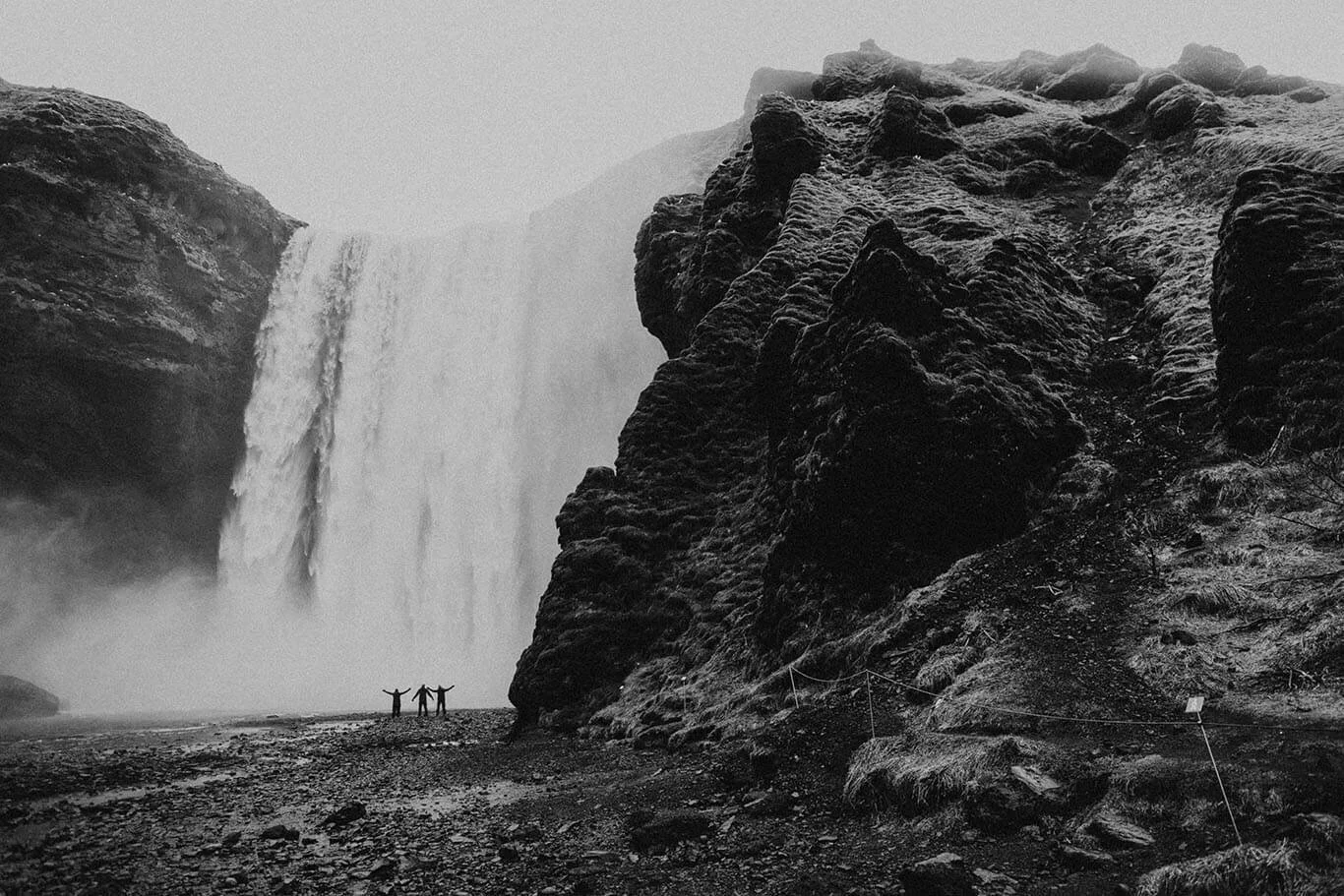
Spring snowmelt fills Iceland's rivers in late April and May, making the waterfalls — Skógafoss, Seljalandsfoss, and dozens of unnamed falls along the south coast — more dramatic than at any other time of year. The volume of water is staggering. It photographs as force.

II.

The landscape is mid-transformation.

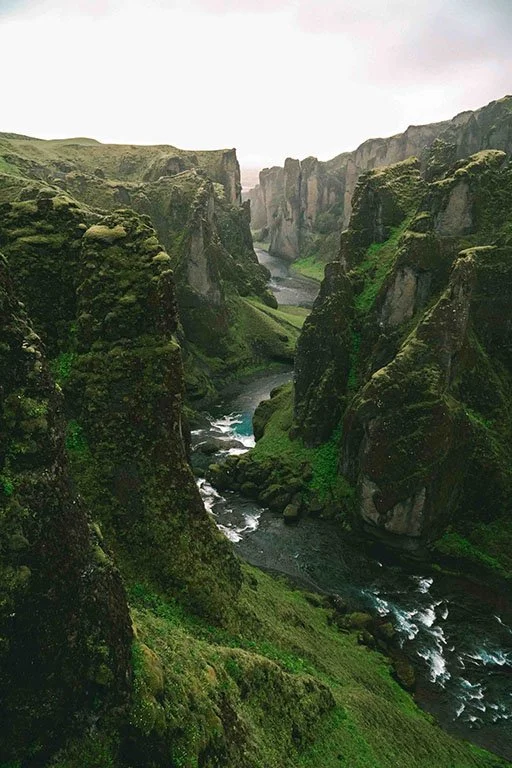
Late April is when Iceland begins to wake up — snow retreating from the lowlands, the first green appearing against black lava rock, the moss beginning to glow. It's a transitional landscape, which is visually interesting in ways that high summer's fully-saturated green isn't. There's a rawness to it.

III.

The crowds haven't arrived yet.

Iceland's peak tourist season begins in June. Late April sees a fraction of summer's visitor numbers, which means the black sand beach with no one else on it is genuinely achievable. The waterfall you can approach without waiting in a line. The lava field that belongs entirely to you.

IV.

The prices are significantly lower.

Flights, accommodations, and rental cars are all priced below summer peak. The $575 roundtrip from Tampa that I'm pointing to in April 2026 doesn't exist in July — it's a late-spring anomaly that won't repeat.

V.

The weather is photogenic even when it's "bad."

Late April skies in Iceland are often dramatic — moving clouds, shifting light, the occasional horizontal mist over the landscape. For photography, this is not a problem. It's atmosphere. The overcast, moody skies that a Florida couple might be nervous about produce a specific kind of cinematic image that clear sunny days simply don't.


On weather expectations: Iceland in late April averages 35–50°F with variable conditions. Some days are crisp and clear; others are grey and wild. In my experience — having shot in Ireland, Colorado, and along Lake Superior — variable weather produces more emotionally resonant images than perfect weather. The elements become part of the story.


The midnight sun question

One of the most common things I hear from couples considering Iceland is: "we want to see the midnight sun." And I understand why — the idea of sun at midnight is genuinely romantic and surreal. But here's the honest truth about it from a photography standpoint: the midnight sun in June and July produces overhead, flat, white light at midnight, which is not what makes Iceland images look the way they do in the photos you've saved to your mood board.

Those moody, cinematic Iceland images you've been collecting? The ones with the dramatic sky and the golden warmth and the sense of something vast and ancient? They were almost certainly made in late April, September, or October — not midsummer. The photographers who know the country seek out those windows specifically because of the quality of the light, not despite its limitations.

Late April gives you something arguably more beautiful than the midnight sun: a long, slow sunset that begins around 9pm and pulls the light low across the landscape for two hours before darkness fully arrives. That window, at a black sand beach or beside a glacial river or on a lava field, is what your images will be made of.


The flight deal context: $575 roundtrip from Tampa to Reykjavík in late April is genuinely unusual. Iceland flights from the US average significantly higher during peak months. This window is a combination of timing, availability, and the specific advantage of traveling before high season begins. It won't last.


What late April asks of you

I want to be honest: late April Iceland requires more preparation than a summer trip. You need to dress for variable conditions (see my wardrobe guide), have contingency location plans, and carry a genuine openness to letting the weather be part of your story rather than something to overcome.

Couples who thrive in this window are the ones who came for Iceland — the real Iceland, not the curated Instagram version — and who understand that the wildness is part of what they're choosing.


If that's you, late April is yours. And right now, a $575 flight is waiting.

The window is open.

Flights from Tampa, April 26–May 5, 2026, at $575 roundtrip. Coverage available for the right couple. Inquire now before either disappears.

INQUIRE ABOUT ICELAND

Read More
elopements Tiffany Nutt elopements Tiffany Nutt

How to Legally Elope in Iceland

How to Legally Elope in Iceland: What US Couples Need to Know A clear, practical guide to the legal requirements for US couples eloping in Iceland — paperwork, timelines, officiants, and what actually matters.
How to Legally Elope in Iceland: What US Couples Need to Know

A clear, practical guide to the legal requirements for US couples eloping in Iceland — paperwork, timelines, officiants, and what actually matters.

The legal side of an Iceland elopement is simpler than most couples expect — but it requires starting earlier than most couples plan. Here's everything you need to know, without the runaround.

Iceland is one of the more accessible countries for foreign couples who want to marry legally on its soil. The government has a clear process, the paperwork is manageable, and the timeline — while important to respect — isn't onerous if you start early enough. For couples eyeing the April 26–May 5, 2026 window, that means beginning this process no later than February or early March of 2026.

The core requirement: a Certificate of No Impediment

To marry in Iceland as a foreign national, you must obtain a Certificate of No Impediment (CNI) — a document issued by your home country confirming that you are legally free to marry (i.e., not already married, of legal age, and with no other legal barrier to the marriage).

As a US citizen, this document is issued at the state level, not the federal level. That means you'll apply through your state's vital records office or, in some cases, through a county clerk. The process and timeline vary by state — Florida couples should plan for approximately 4–8 weeks from application to receipt.

Important: Some states require an apostille to be attached to the CNI before it will be accepted internationally. Iceland accepts apostilled US documents. Check with your specific state's office about whether this step is automatic or requires a separate request.

Step by step: the full process

01 — Obtain your Certificate of No Impediment Apply through your state vital records office (for Florida couples, this is the Florida Department of Health). You will need valid government ID, proof of any prior marriages having been legally dissolved, and a small fee. Plan 4–8 weeks for processing.

02 — Have the document apostilled An apostille is an internationally recognized form of document authentication. Once your CNI is issued, you'll send it to your state's Secretary of State office for apostille. Some states do this simultaneously; others require a separate step. Florida couples can request this through the Florida Secretary of State.

03 — Submit your application to Registers Iceland Registers Iceland (Þjóðskrá Íslands) is the national agency that processes marriage applications for foreign nationals. You will submit your apostilled CNIs, passports, and a completed marriage application. This can be done by mail or, in some cases, electronically. They will issue a confirmation and assign your ceremony date.

04 — Choose your officiant Iceland allows marriage ceremonies to be performed by civil registrars, licensed clergy, or secular humanist celebrants. You do not need to be married inside a building — ceremonies in Iceland can legally take place outdoors. This is what makes it possible to stand at a waterfall or on a lava field and have your union be fully legally binding.

05 — Marry, receive your certificate, take it home After the ceremony, you'll receive an Icelandic marriage certificate. To have this recognized in the US, you may need to have it translated and apostilled — your state's process will determine exactly what's required. Many couples handle this after returning home.

Documents you'll need to gather

  • Valid passports for both partners (must be valid for the duration of your trip)

  • Certificate of No Impediment from your state, apostilled

  • If previously married: certified copies of divorce decree(s) or death certificate(s), apostilled

  • Completed marriage application (obtained from Registers Iceland)

  • Two witnesses — these can be family or friends traveling with you, or in some cases the officiant can arrange witnesses

The timeline reality for April 26–May 5, 2026: If you're targeting this window, you should begin your CNI application no later than early February 2026. That gives you a buffer for processing, apostille, and Registers Iceland's review. Starting in March or April is cutting it close and may require expedited processing fees.

What if you want to marry symbolically and legally at home?

This is a perfectly valid and increasingly common approach — and one I support fully. Some couples marry legally at their local courthouse in the weeks before their trip, then hold their "real" ceremony in Iceland with an officiant who conducts a symbolic ceremony. This gives you all the legal simplicity of a domestic marriage plus all the visual and emotional power of an Iceland elopement.

The images are indistinguishable. The feeling is the same. And the logistics are significantly simpler.

If this appeals to you, the only paperwork you need to bring to Iceland is your own — no CNI, no Registers Iceland application, no apostille. You're simply two married people renewing their vows in an extraordinary location, and I'm there to document it.

Recommended planning timeline

Now → Inquire and confirm your photographer. Lock in coverage first. Everything else schedules around your date.

February → Begin CNI application. Apply through your state vital records office. Request apostille in the same process if possible.

March → Submit to Registers Iceland. Once your apostilled CNI arrives, submit your marriage application to Þjóðskrá Íslands.

April → Confirm officiant and ceremony details. Finalize your outdoor ceremony location, officiant, and any witness logistics.

Then → Elope in Iceland. You show up. I will document it. Iceland does the rest.

The part that actually matters

The paperwork is real, and you should take the timeline seriously — but it is not the hardest part of eloping in Iceland. I've watched couples tie themselves in knots over the legal process and forget that the actual difficult thing is making the decision. Saying: this is what we want. Not a production, not a performance. Just us, somewhere that takes our breath away.

Once you've made that decision, the rest is logistics. And logistics have solutions.

Ready to start planning?

Inquire about the April 26–May 5, 2026 Iceland window. I'll walk you through the full planning process — including the paperwork — from the beginning.

INQUIRE ABOUT ICELAND 

A note on accuracy: This guide reflects general legal requirements for US citizens marrying in Iceland as of early 2026 and is intended as an orientation, not legal advice. Requirements can change. Always confirm current requirements directly with Registers Iceland (Þjóðskrá Íslands) and your state's vital records office before beginning the process.

Read More
elopements, micro weddings Tiffany Nutt elopements, micro weddings Tiffany Nutt

How to Plan an Elopement or Micro Wedding with Boundaries

One of the hardest parts of planning an elopement or micro wedding isn’t logistics — it’s navigating family expectations. Read this blog to get help with telling your fam and setting healthy expectations.

One of the hardest parts of planning an elopement or micro wedding isn’t logistics — it’s navigating family expectations.

Many couples feel torn between:

  • honoring their loved ones

  • protecting their own peace

  • avoiding conflict

  • and staying true to themselves

This tension is incredibly common — and completely valid.

How to Plan an Elopement or Micro Wedding When Family Expectations Feel Heavy

Why Family Conversations Feel So Difficult

For many families, weddings symbolize tradition, community, and shared milestones. When couples choose something smaller or different, loved ones may feel confused, hurt, or afraid of being excluded — even when that isn’t the couple’s intention.

That emotional weight can make couples second-guess their choices or compromise in ways that don’t feel right.

But clarity and communication can change everything.

Boundaries Aren’t About Pushing People Away

Choosing an intimate wedding isn’t about rejection.
It’s about alignment.

Boundaries allow couples to:

  • protect the emotional tone of the day

  • avoid resentment

  • communicate with honesty and care

  • celebrate in a way that feels authentic

When couples approach these conversations with confidence and compassion, family dynamics often soften over time.

Planning With Confidence Changes the Conversation

When couples know:

  • why they’re choosing an elopement or micro wedding

  • what the day will look like

  • how they plan to celebrate

  • where loved ones fit into their lives beyond the wedding day

Those conversations become less defensive and more grounded.

Clarity doesn’t eliminate emotion — but it does reduce conflict.

Support for Couples Navigating This Stage

One full chapter of The Intimate Wedding Guide is dedicated to navigating family expectations — including scripts, mindset shifts, and boundary-setting guidance.

If this part of planning feels heavy for you, you don’t have to navigate it alone.

Read More